
A landlord called me in September about a duplex he’d owned since the early 2000s. His tenant had eleven months left on a lease, and he was convinced that meant he couldn’t sell until the following summer. He was wrong, and I still remember the relief in his voice when I explained why. Selling a rental property with tenants in North Carolina is legal, common, and often simpler than selling an empty house. What trips people up is the paperwork nobody reads until closing week.
Can You Sell a North Carolina Rental Property with Tenants Still Living in It?
Some years back I sat at a kitchen table in Garner with a woman holding a lease she’d signed with a tenant who had since stopped answering her texts. She wanted out, fast, and figured eviction court was her only option.
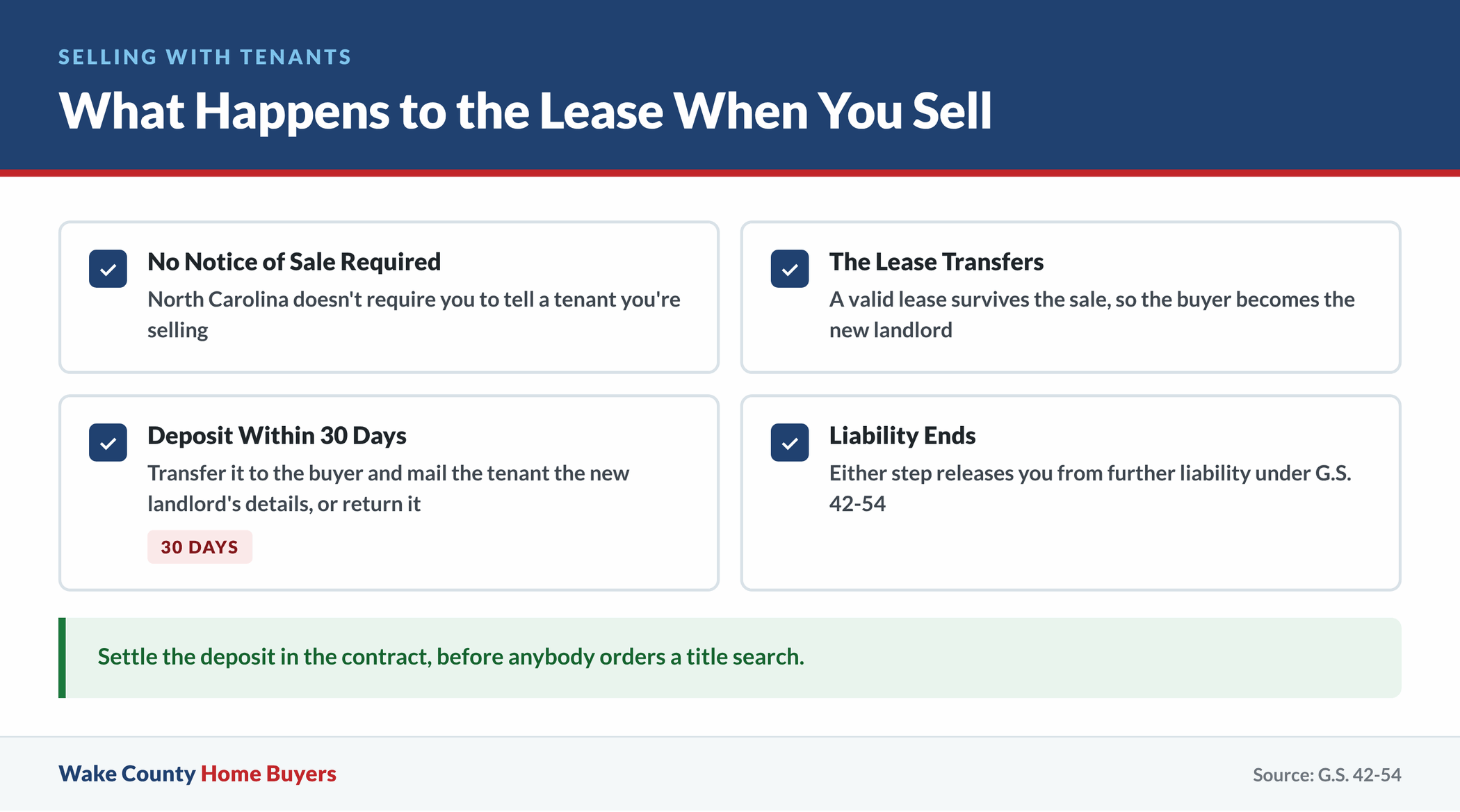
Yes, you can sell. An owner in North Carolina may sell rental property without giving tenants any special “notice of sale,” and a valid lease generally survives the transaction, so the buyer becomes the new landlord. Everything else is shaped by that single rule, because the tenancy doesn’t evaporate at closing. It rides along with the deed.
What that means practically: your buyer inherits your tenant, your rent roll, and your lease terms. The new owner must honor the existing lease, so the tenant can’t be forced out simply because it changed hands. Plenty of buyers want exactly that arrangement.
Deposits deserve more attention than they usually get. Under G.S. 42-54, you have 30 days after closing to act on the deposit. You either transfer what’s left to the buyer and mail the tenant the new landlord’s name and address, or you return it to the tenant. Doing either one releases you from further liability. You can read the chapter itself on the North Carolina General Assembly site.
I’ve watched sellers treat that deposit like a line item they’d sort out later. Sort it out in the contract instead, before anybody orders a title search.
Why Sell a Rental Property with Tenants in North Carolina?
Vacating a good tenant before listing is usually a mistake that costs more than it earns.
Think about what an empty unit does to your numbers. Rent stops. The mortgage doesn’t. Utilities switch back to your name, the lawn still needs cutting, and it just sits there generating nothing but expense while you wait for an offer.
A while back I bought a brick ranch from a longtime landlord in Wilson who’d been quietly covering two mortgages for close to a year. His tenant had moved out, he’d started a bathroom remodel, and the half-finished tile was still stacked in the garage next to a riding mower he never used. He hadn’t told his family how deep the bleeding had gone.
Occupied sales solve a cash-flow problem that vacant listings create, because your rental income keeps landing while it is under contract. Investor buyers also price in the value of a paying tenant; an occupied unit with documented rent history and a clean payment record carries real weight in a negotiation.
Sellers must time a slower market carefully. Median days on market across North Carolina reached 63 in July 2026, up from 58 in June of the same year, according to Realtor.com data compiled by FRED. Two and a half months of carrying it empty is a real number, not a rounding error.
Tired of the calls? Some owners sell simply because the management side wore them down, and that’s a legitimate reason without any financial justification attached.
What Factors Affect Selling a Tenant-occupied Rental Property in North Carolina?
That’s where the specifics of your situation start driving the outcome more than the house itself does.
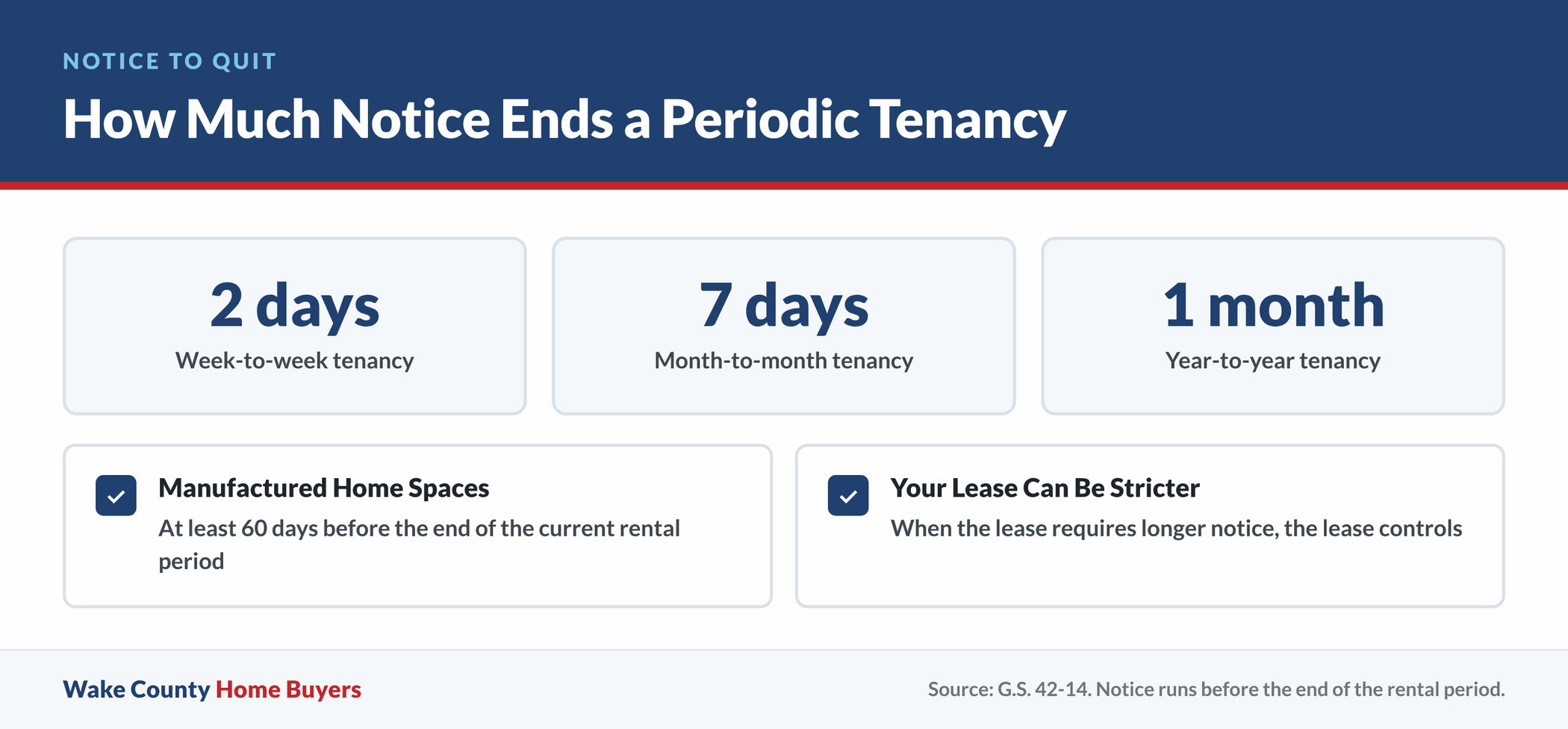
Lease type sits at the top of the list. A tenant on a fixed term through next August limits your buyer pool to investors; a month-to-month tenant opens the door to owner-occupant buyers, since the tenancy can be ended on a short timeline. Those are two different sale strategies with two different price outcomes.
Rent level relative to market comes next. If you’ve kept a good tenant at below-market rent for six years, an investor runs the math on current rents, not yours. Expect that gap to show up in the offer.
Condition inside the unit is the factor sellers underestimate. You might not have walked the interior in two years. A buyer will, and whatever’s behind that door shapes the price.
Local market conditions move the needle too. Wake County’s median sale price was $440,000 in August 2026, according to the county’s Register of Deeds, down from earlier in the year. Softer pricing in Raleigh, Cary, and Knightdale means investor buyers negotiate harder than they did in 2021.
Lenders slow everything down. Conventional lenders scrutinize occupied properties, and appraisers sometimes can’t get interior access without tenant cooperation. Cash buyers sidestep that entirely. This is part of why so many North Carolina landlords end up selling a tenant-occupied rental property to a company like Wake County Home Buyers rather than fighting an appraisal contingency for six weeks.
How Do North Carolina Lease Agreements Affect Selling a Rental Property?
A seller in Clayton listed in March with a tenant whose lease ran through December. By May she’d received exactly one offer, from an investor, at a number she didn’t like.
Her lease was the whole story. A sale doesn’t terminate a fixed-term lease, so your realistic choices are selling with the tenant in place or negotiating a voluntary early move-out. There’s no third door.
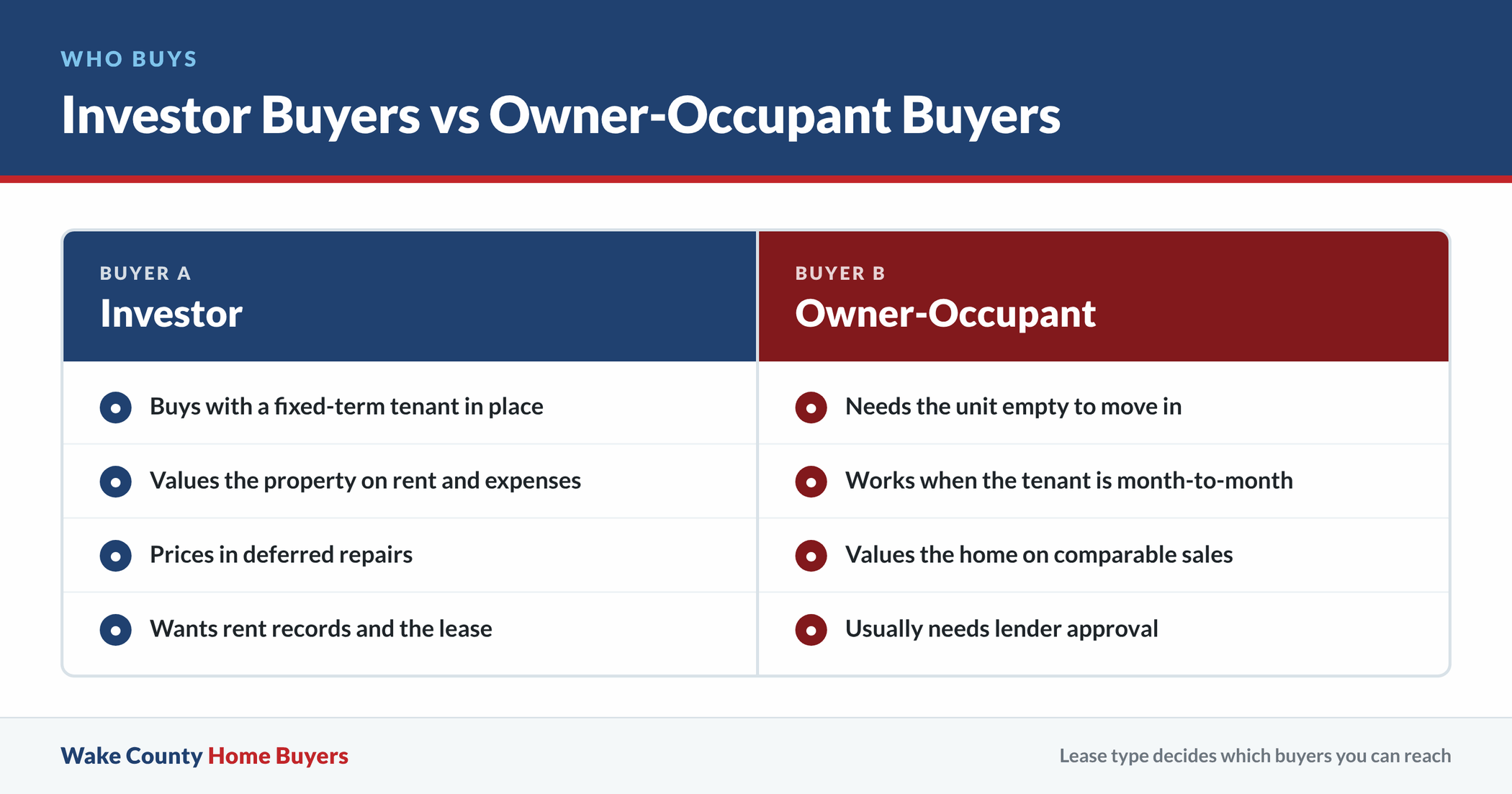
Periodic tenancies work differently, and the North Carolina rule is one of the shortest in the country. Under G.S. 42-14, a month-to-month tenancy ends with a notice to quit of seven days; year-to-year requires one month or more before the end of the current year of the tenancy; week-to-week requires two days. Where the tenancy involves only the rental of a space for a manufactured home, the notice must be given at least 60 days before the end of the current rental period. This applies regardless of the term. You can read the section on the General Assembly’s statute page.
Those seven days run before the end of the current rental period, not seven days from whenever you hand over the letter, so count carefully. Your own lease may also require longer notice than the statute does, and the lease controls when it’s stricter.
Your rental agreement governs showing access as well. North Carolina has no state law setting how much notice a landlord must give before entering rental property, so whatever your lease says about entry is what you’re working with. Vague lease language on this point creates arguments at the worst possible moment.
Have you actually reread your own lease recently? Most landlords I meet haven’t, and the clause they forgot about is usually the one that matters.
What Is Your Tenant-occupied Rental Property Worth in North Carolina?
“Does having a tenant lower my price?”
Sometimes, sometimes not. It all depends on who’s buying. An investor values your rental property on income: gross rent, operating expenses, local vacancy, and what repairs are deferred. An owner-occupant values it on comparable sales and whether they can move in by August.
Start with a real comp pull for your submarket, not the statewide figure. A duplex in Durham doesn’t price like one in Fayetteville this year, and the Greensboro and Burlington markets tell a different story than the Triangle does. Pull recent comps from your own neighborhood instead.
Then subtract honestly. Deferred maintenance you’ve been postponing, the HVAC that’s fourteen years old, the roof that got patched after Hurricane Helene rather than replaced: all of that gets subtracted. That happens in any offer worth taking seriously.
A tenant paying market rent on time adds value. A tenant six weeks behind subtracts it, because the buyer is pricing in the cost and delay of a summary ejectment proceeding they’d rather not file.
Rental income documentation is leverage you already own. Pull twelve months of payment records, the signed lease or rental agreement, the deposit ledger, and any repair invoices. I’ve seen clean records move an offer up by thousands, because an organized file tells a buyer the rental property was managed rather than neglected.
One opinion I’ll hold firmly: getting three investor offers on a tenant-occupied rental property in North Carolina tells you more about market value than any online estimate ever will.
How Do You Market a North Carolina Rental Property with Tenants Inside?
Will your tenant scare off buyers or lower your sale price? Most listing agents in North Carolina have never sold an occupied investment property and will quietly price yours as though it were vacant. A month can be lost to that mismatch alone.
Marketing an occupied rental property means marketing to investors. Your listing needs the numbers up front: current rent, lease expiration, deposit held, tax value, and recent capital improvements. Photos of the kitchen matter less than a clean operating statement.
Showings are the hard part. Your tenant has no obligation to make the unit presentable for strangers, and pushing too hard turns a neutral party into an obstacle.
Bundle showings instead of scattering them. Two windows a week, scheduled in writing, beats eleven random knocks. Offering a rent credit for cooperation costs less than two weeks of extra market time, and I’d make that trade every single time.
Some sellers skip public marketing altogether. Listing a tenant-occupied rental property on the MLS puts your tenant’s living situation on the internet, which generates anxiety and occasionally a surprise move-out. Selling directly to a North Carolina investor who buys occupied units avoids the whole circus. Wake County Home Buyers handles these transactions without a single public showing.
Nobody plans for the role weather plays. Scheduling exterior photography in the Triad during a wet February, or trying to show a Wilmington rental property during hurricane watch week, wastes everybody’s time.

Should You Sell Your Rental Property Directly to the Tenant?
Your tenant loves the house, has paid on time for four years, and says they’d buy it. That conversation feels like the easiest sale you’ll ever make, right up until their lender pulls credit and the pre-approval doesn’t come through.
Tenant buyers fall through more often than they close. Renters who could qualify for a mortgage frequently already own. That’s not a criticism of anybody; it’s just what the application data usually shows.
Still, it’s worth asking. A tenant buyer eliminates showings, vacancy, and handoff risk completely. If they’re serious, require a lender pre-approval letter within ten days before you take the rental property off the market for them.
Seller financing comes up in these conversations constantly. Owner-carried notes appeal to buyers who can’t clear bank underwriting, especially in a year when mortgage rates stay high. Before you offer one, talk to a North Carolina real estate attorney about Dodd-Frank requirements and how a default would unwind.
Price it like a real transaction. Discounting heavily because you like someone creates resentment later when they resell, and it muddies your basis for tax purposes.
Set a deadline and hold it. Give your tenant thirty days to produce financing, then move on without guilt if the clock runs out, because your rental property can’t wait indefinitely on a maybe.
What Happens If Your Tenant Won’t Cooperate with the Rental Property Sale?
I used to think an uncooperative tenant meant the sale was dead, and I pushed sellers toward eviction far too quickly.
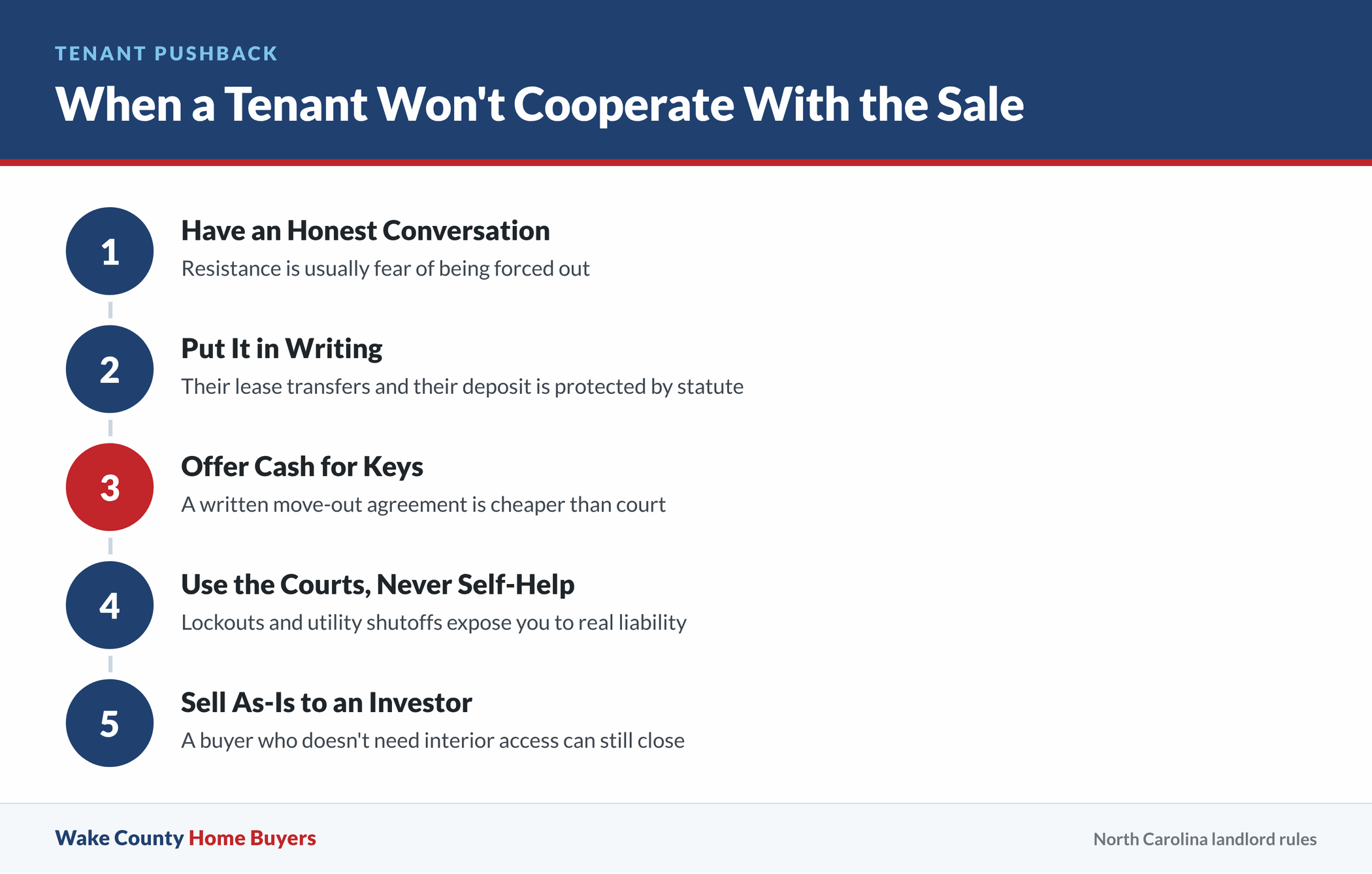
Resistance is almost always fear. A tenant who hears the rental property is selling assumes they’re being thrown out, and refusing showings is the only control they have. Fifteen minutes of honest conversation resolves more of these than any attorney’s letter.
Put the truth in writing. Their lease transfers, their deposit is protected by statute, and the new owner steps into your shoes. That letter changes the temperature in most cases.
When it doesn’t, cash for keys is cheaper than court. A negotiated move-out with a written agreement and a reasonable payment beats a summary ejectment calendar every time. If a tenant holds over after proper notice, you’ve got to recover possession through the courts in North Carolina, since self-help is never permitted. Lockouts and utility shutoffs expose you to liability that dwarfs whatever you were trying to save.
And if none of that works, sell the rental property as-is to an investor who doesn’t need interior access. That’s the quiet advantage of selling to a buyer who already owns rentals nearby and has handled difficult handoffs before.
A homeowner in Sanford reached out on a Tuesday after moving her father into assisted living last year. He’d rented out his old house for years, and the tenant had stopped letting anyone inside. She found a stack of unopened county tax notices in his kitchen drawer, along with a lease nobody had signed since 2019. She didn’t need top dollar; she needed the rental property off her plate before his care costs ate the rest of his savings.
Frequently Asked Questions
Do I Need My Tenant’s Permission to Sell My Rental Property?
No. The rental property is yours, and the existing agreement simply carries over to the new owner. You don’t need their signature or their approval. What you do need is their cooperation for showings and inspections, and the terms you both signed decide how much access you get. A short, honest letter explaining that their rights and deposit are protected usually earns that cooperation faster than anything else.
How Much Notice Do I Have to Give My Tenant If I Want to Sell?
North Carolina doesn’t require you to notify a tenant that you’re selling at all, since the lease simply continues with the new owner. Notice only enters the picture if you want the rental property empty at closing, and then the amount depends on the tenancy type as described above. Your lease may also impose its own notice requirements that run longer than the statute, so read it before you send anything.
Can My Buyer Evict My Tenant After Closing?
Not just because the rental property sold. A buyer who takes title with a fixed-term lease in place has to honor it through expiration, the same as you would have. With a periodic tenancy, the new owner can serve the appropriate notice to quit on the same timeline you could have, and go through the courts if the tenant stays past it.
Do I Have to Let My Tenant Know Where Their Security Deposit Went?
Yes, and this is the step sellers skip most often. Whichever route you take, transferring the deposit to your buyer or returning it, the tenant needs written notice of what happened to their money within the window set by the Tenant Security Deposit Act. Your closing attorney can paper this correctly, and North Carolina requires an attorney at every closing anyway.
Will I Owe Taxes When I Sell a Rental Property in North Carolina?
Probably some. Depreciation you claimed over the years gets recaptured, and any gain beyond your adjusted basis is taxable at capital gains rates. A 1031 exchange can defer that if you’re reinvesting in another investment property, but the timelines are strict and start running at closing. Talk to a CPA before you sign a contract, not after.
If you’re sitting on a tenant-occupied rental property in North Carolina and you’re not sure which direction makes sense, I’m happy to talk it through. No pressure, no obligation, and no hard feelings if you decide listing with an agent or holding onto it is the better call. Sometimes a twenty-minute phone conversation is all somebody needs to stop losing sleep over it.
Selling a Rental Property With Tenants in Raleigh and Across North Carolina
Most of the occupied rentals we look at sit around Raleigh and the Triangle, though landlords call from all over the state.
If you’d like to compare a listing against a direct sale with the tenant still in place, we’re glad to run the numbers. You can also see how we buy houses in North Carolina with leases still running.
Talk With Us About Your Rental
Tell us about the lease, the tenant and what you’d like to walk away with. When you’re ready, reach out to our team for a straight answer with no pressure and no obligation.