

A gray plastic pipe behind your water heater can cost you a buyer three days before closing. Usually, polybutylene pipes are the culprit, a plumbing material that millions of American houses still run on, and selling with it is legal in North Carolina. Selling with it and pretending it isn’t there is where sellers get into real trouble.
What Are Polybutylene Pipes and Why Do They Matter in North Carolina?
Not long ago a seller in Apex called me after her buyer’s inspector spent eleven minutes in the crawlspace and came out with photos. Her contract died the following Monday, since she had no idea what the gray tubing under her kitchen sink even was.
Polybutylene is flexible plastic supply pipe, and it ran water through a staggering number of houses. InterNACHI, the home inspector association, dates manufacture from 1978 to mid-1995 and counts as many as 10 million US homes plumbed in the material. The failure mechanism is ugly because chlorine and other oxidants in municipal water attack the pipe from the inside, making it brittle and prone to cracking. Its plastic acetal fittings crack as well.
North Carolina grew at a time that matters here. Subdivisions filled in around Cary, Matthews, Clemmons, and Wilmington through the eighties and early nineties, matching almost exactly the window when polybutylene pipes were going into walls. Drive through Kildaire Farms or older sections of Greensboro and you’re looking at prime territory. I’ve walked enough of these houses to spot the telltale gray pipe before I even check the panel box.
Early last year I bought a rental from a longtime landlord in Garner who got a job transfer with five weeks to be out of state. This meant he couldn’t wait around for the right buyer. Those three bathrooms of untouched gray pipe were why two retail buyers had already walked.
Old wiring sits in the same category of trouble, just a different decade. Knob-and-tube shows up in pre-war houses in Winston-Salem and Asheville, while aluminum branch wiring turns up in sixties and seventies construction. Both scare underwriters the same way those pipes do.
How Do I Know If My House Has Polybutylene Pipes or Old Wiring?
One Durham seller swore her 1987 house had copper throughout because her plumber “replaced everything.” The inspector found the replacement stopped at the water heater and the rest of the house still ran gray.
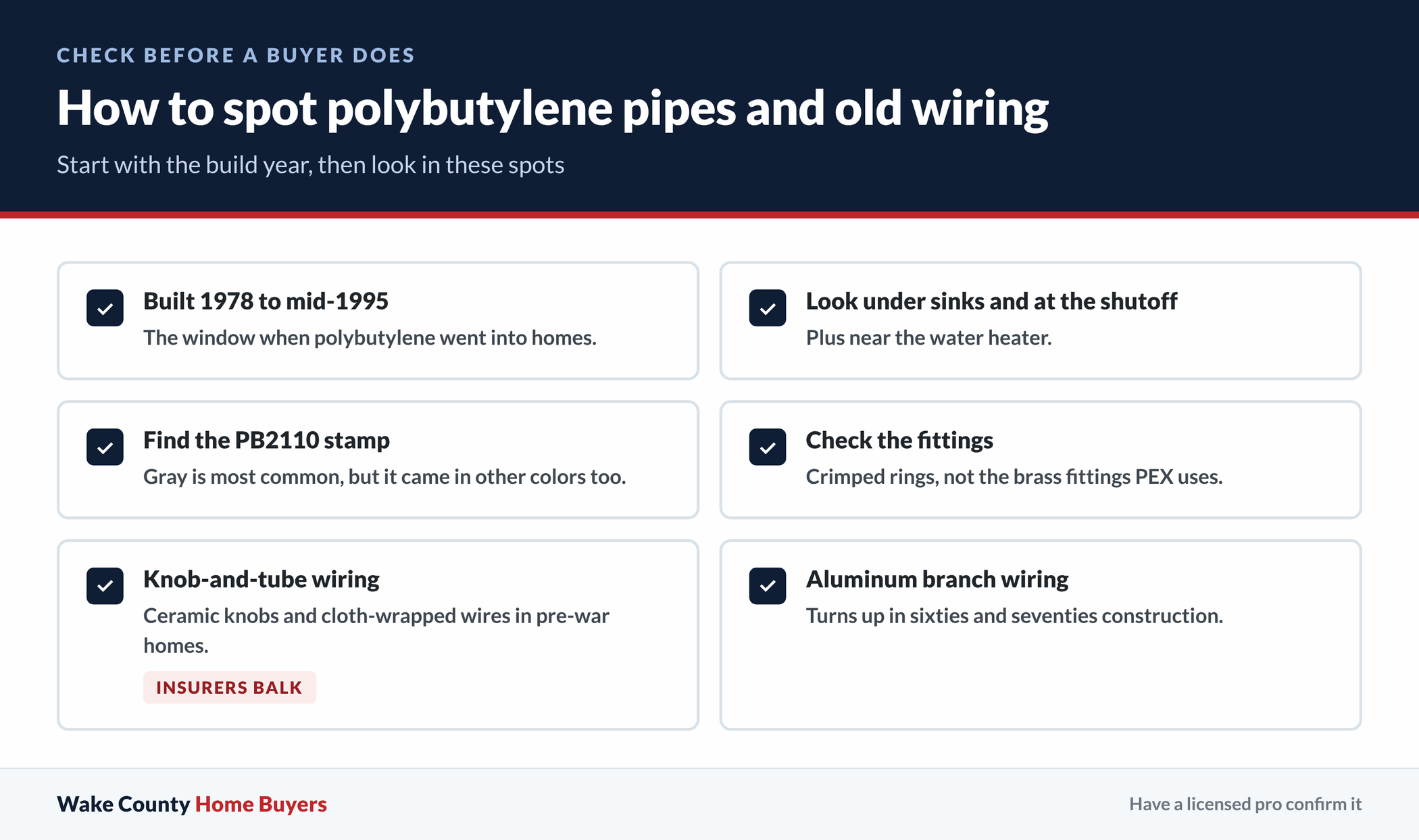
Start with the build year, since that narrows things fast. Then check three spots: under sinks, near the water heater, and at the main shutoff valve, looking for a PB2110 stamp, which is the marking most of this pipe carries. Gray is most common, but the material was also made in white, silver, black, and blue, with blue mostly used for outdoor cold water lines.
Polybutylene joints use gray plastic or metal fittings held by crimped rings. PEX runs red, blue, or white with brass fittings and different markings. If you’re squinting at a pipe in a crawlspace in August wondering which you’ve got, pay a plumber for an hour of their time and get it in writing.
Wiring takes a flashlight and a look in the attic or basement. Knob-and-tube means ceramic knobs holding single cloth-wrapped conductors across joists.
Have you had a licensed electrician or plumber actually evaluate yours, or are you going off what the last owner told you?
I’d rather a seller know the answer than hope. Finding them yourself, before a buyer’s inspector does, lets you set the terms of the conversation.
Can You Sell a House with Polybutylene Pipes or Old Wiring in North Carolina?
And the answer is yes, plainly and without asterisks. No statute in North Carolina bars the sale of a house with polybutylene pipes, knob-and-tube wiring, or a fuse panel from 1961.
What shifts is the pool of buyers and the price they’ll pay. Any conventional buyer with 5% down needs an insurance binder before the lender will fund, so when a carrier balks at polybutylene pipes, the loan stalls. That sale is over regardless of how much your buyer loved the backyard.
Sellers underestimate how much timing matters right now. North Carolina’s median days on market hit 71 in October 2026, up from 58 in June of that year, according to Realtor.com data tracked by the St. Louis Fed. One failed inspection two weeks into that run doesn’t just cost you a buyer. It resets your clock and stamps your listing with a days-on-market number buyers read as desperation.
That’s the structural reason investors and local buying companies can close on houses with polybutylene pipes while a retail sale falls apart. We’re buying the condition, not borrowing against it.
Sellers who ask me whether they should repipe first usually have a better question underneath: will I get that money back? Often not fully, and I’ll get into that further down. A seller in a hot pocket like Cary with a well-maintained house and one plumbing issue is in a very different spot. This differs from someone with polybutylene pipes, a dated panel, and a roof at the end of its life.
What Must I Disclose About Polybutylene Pipes When Selling in North Carolina?
Some owners tell me they’ll just stay quiet and let the inspector find it.
North Carolina runs on the Residential Property Disclosure Act. The law sits at Chapter 47E of the General Statutes. If you’re selling a home with one to four dwelling units, you must complete the Residential Property and Owners’ Association Disclosure Statement. You can pull it straight from the North Carolina Real Estate Commission’s rule. Under G.S. 47E-5, you must give it to the buyer no later than the time they make an offer.
Now the wrinkle that surprises people. You can answer each question yes, no, or “no representation,” so while the form is mandatory, the “no representation” option means it doesn’t force disclosure of any particular condition. The full statute text sits on the General Assembly’s website.
Does that mean you can hide them behind a checkbox? No. Answering “no representation” across the board when you know your house has them invites a fraud claim. Anyone who affirmatively says the plumbing is fine when it isn’t has a real problem. The statute also says you must promptly deliver a corrected statement if something you’ve already disclosed becomes materially inaccurate.
I’ve never once seen full disclosure of polybutylene pipes cost a seller a sale that honest pricing couldn’t have saved. Concealment costs plenty.
Old plumbing invoices, a partial repipe permit, the electrician’s inspection from four years ago. Paperwork calms buyers down more than reassurance does.
What Will Buyers and Lenders Say About Polybutylene Pipes or Old Wiring?
The insurance carrier, not the buyer, is the one who actually kills these sales in North Carolina.
These stages mark how the process unfolds. Your buyer’s agent sends the inspection report to the buyer’s insurance agent, and the carrier either declines the risk or attaches conditions. Some carriers add a polybutylene endorsement that excludes any failure stemming from PB pipe. Others simply won’t write new business at all. Either answer leaves your buyer without the binder the lender needs.
Wiring draws the same reflex. Knob-and-tube is considered risky enough that many insurance companies won’t cover a home that has it.
Lenders rarely object to polybutylene pipes directly. They object to no insurance binder, which amounts to the same thing. FHA and VA appraisers can also flag active leaks or exposed wiring as health and safety items requiring repair before closing.
Buyers themselves? Most of them Google the material from their car in your driveway and arrive at the walkthrough already nervous. Some will proceed with a credit. Many won’t, and that’s not irrational of them. Replacing polybutylene pipes in a two-story house with finished basement ceilings means cutting drywall in a dozen places.
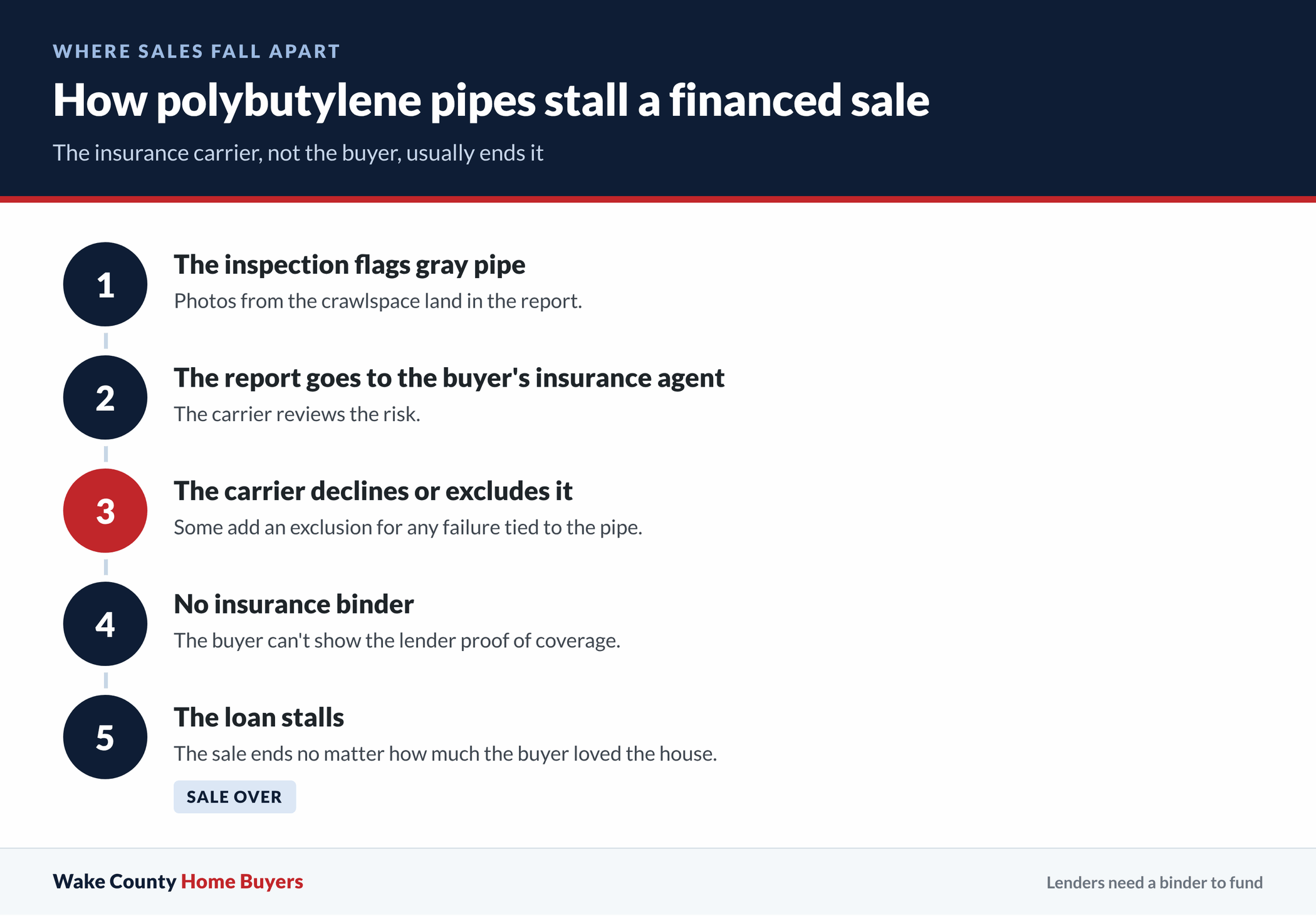
A buyer’s loan approval means nothing once the carrier reads that page of the inspection.
Will Polybutylene Pipes Lower My Home’s Selling Price in North Carolina?
Buyers almost never deduct the actual repipe cost. They deduct the repipe cost plus the aggravation, and the aggravation number is theirs to invent.
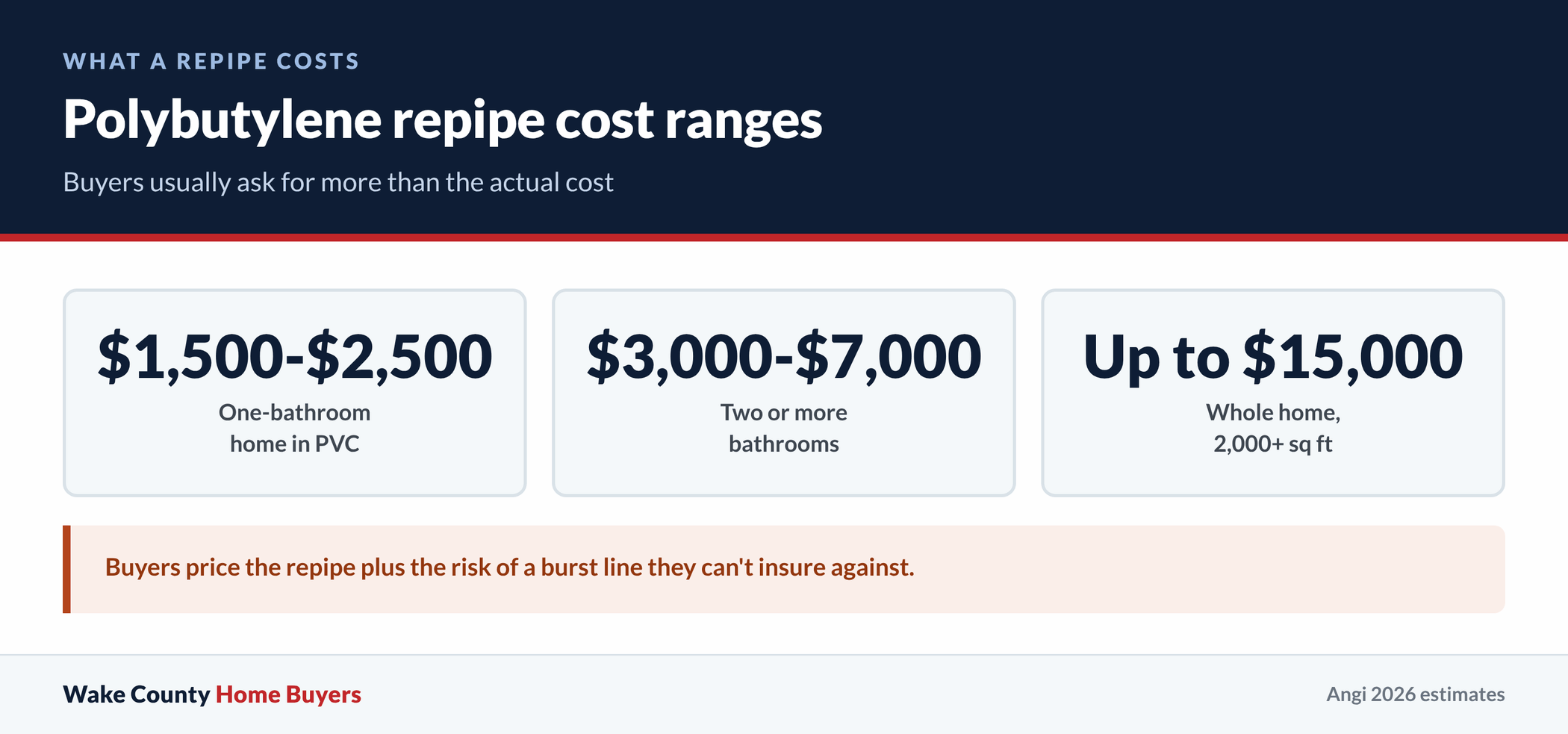
Repipe pricing gives you the floor. Angi’s 2026 data puts a repipe at $1,500 to $2,500 for a one-bathroom home redone in PVC and $3,000 to $7,000 for two or more bathrooms. A whole home of 2,000 square feet or larger can run up to $15,000, and HomeGuide’s 2026 figures land in a comparable range.
Where does that land against local values? Wake County’s median sale price was $459,000 over the three months ending October 2026, down 4.1% from the same period a year earlier. A fifteen-thousand-dollar whole-house repipe on a house near that median is roughly three percent of value. Buyers routinely ask for double that when polybutylene pipes show up on an inspection report, because they’re also pricing the risk of a burst line and water damage they can’t insure against.
Softer markets make that worse. Charlotte home prices over the three months ending October 2026 were down 1.3% year over year at a median of $415,000, with homes averaging 63 days on market versus 56 a year earlier. When buyers have choices, they walk from problems instead of negotiating through them.
Opinion, stated plainly: repiping purely to chase retail price usually doesn’t pay in North Carolina unless your house is otherwise spotless and in a neighborhood where buyers compete. Spend $12,000 on a house that also needs a roof and you’ve bought yourself a nicer-plumbed house that still won’t appraise.
How Do I Price My Home If It Has Polybutylene Pipes or Old Wiring?
Set your number like a buyer who already knows, because by the time they’re writing an offer, they will.
Pull three recent comps in your submarket, then ask what each of them had that yours doesn’t. Updated plumbing is a line item in that comparison whether anyone names it or not. Durham, for example, saw a median of $425,000 over the three months ending October 2026, down 1.2%, with homes averaging 49 days on the market compared to 40 a year prior. A house with polybutylene pipes priced at the neighborhood median in that environment sits, and I’ve watched sellers eat weeks of carrying costs waiting for a buyer who never shows.
Two approaches work. Price at full market value and offer a specific repipe credit at closing, with a plumber’s written bid attached so the number isn’t a guess. Or price below the comps, say so in the listing remarks, and let the discount do the arguing for you.
Pricing at the median and hoping usually buys you three weeks of showings, a terminated contract and a reduced price anyway.
What’s your actual timeline? A seller with eight months and savings can run the retail play. Someone with a closing date on their next house in six weeks should be looking at Wake County Home Buyers or a similar local buyer and comparing the net, not the headline price.
Figure your net after agent commissions, which in North Carolina typically take a meaningful cut of the sale price between both sides, before you decide any path is cheaper than another.
What Are My Options for Selling a North Carolina House with Polybutylene Pipes?
Plenty of people tell me a cash offer looks low. Fair, and I’d say the same thing. Still, compare the whole picture, not just the offer number. Add up a retail sale with a repipe credit, two months of carrying costs, commissions, and a one percent inspection renegotiation. That total often nets within a few thousand dollars of a straight cash sale that closes in two weeks.
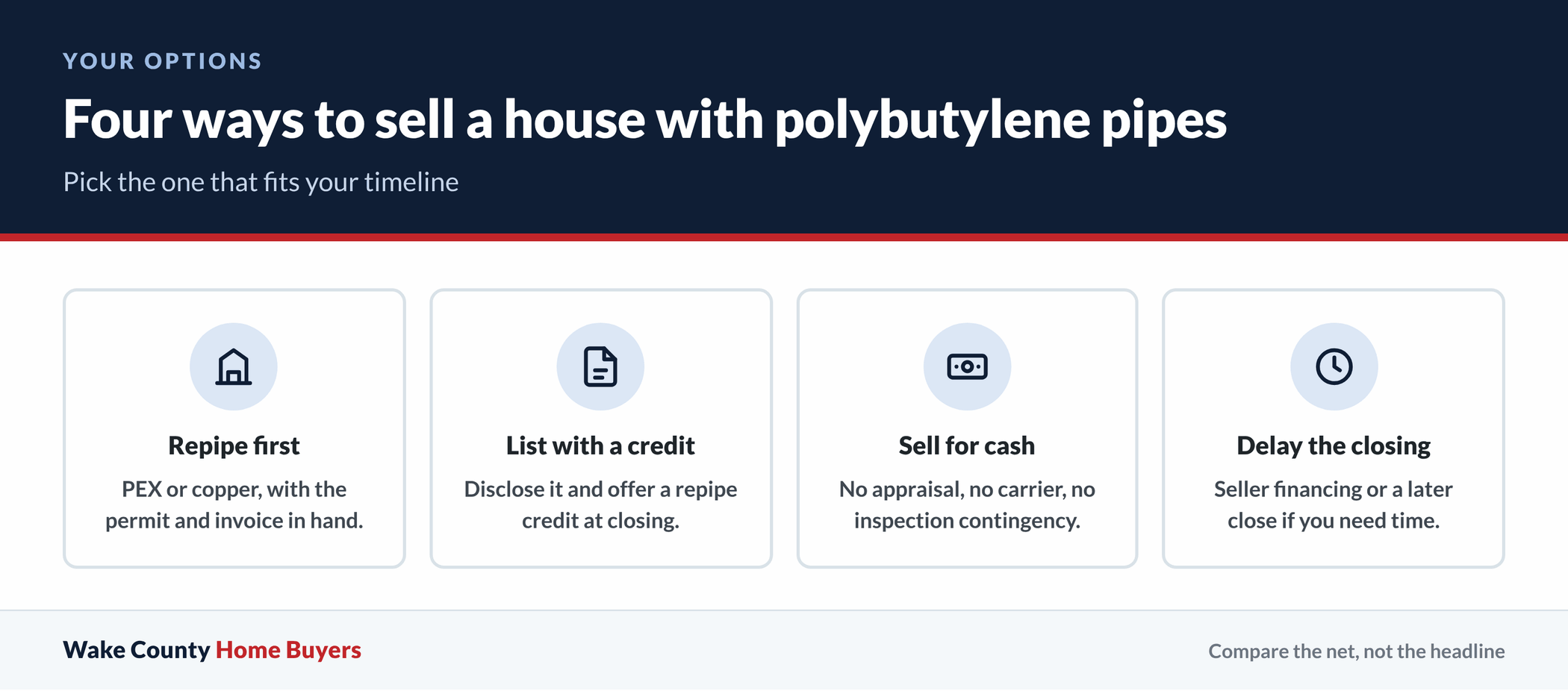
Option one is fixing it first. Repipe in PEX or copper, keep the permit and the invoice, and market the house as updated.
The other option is listing as-is with full disclosure and a credit. You’ll reach fewer buyers, since financed buyers need that insurance binder, but it keeps you in the retail pool. Price it honestly and this works more often than its reputation suggests.
Selling direct to a local cash buyer is option three. No appraisal, no carrier underwriting your polybutylene pipes, no inspection contingency to renegotiate. The trade is price for certainty, and for a lot of sellers in North Carolina that trade is worth making.
Option four nobody mentions: sell to an investor on seller financing or with a delayed closing if you need time to move.
A few summers back an heir in Thomasville called about her late father’s house, packed with thirty years of belongings and a garage full of woodworking equipment nobody wanted to handle. The house had original gray supply lines running through a crawlspace that hadn’t been dry in years, and with her three siblings living out of state, they all wanted it resolved by Thanksgiving. We bought it with the contents still inside, and she took one Saturday to pull out the photo albums and the tools she wanted.
If you’re sorting through options and want a second opinion on the numbers, Wake County Home Buyers will walk the math with you even if a listing turns out to be the better path.
Frequently Asked Questions About Polybutylene Pipes in North Carolina
Are Polybutylene Pipes Still Sold Today?
No. Manufacturing for residential plumbing ended in the mid-1990s, and the material is no longer available for new installation anywhere in North Carolina or elsewhere in the country. Plumbers today use PEX or copper for supply lines. If someone offers to repair your system with the same material, find another plumber.
Can I Sell a House in North Carolina That Has Knob-and-tube Wiring?
Yes, and plenty of older homes in Asheville, Wilmington, and historic Winston-Salem neighborhoods sell every year with some knob-and-tube still in place. The obstacle is the same one polybutylene pipes create: a buyer’s insurance carrier may decline the policy, which stops a mortgage cold. Disclose what you know, get an electrician’s written assessment of what’s active versus abandoned, and expect cash buyers and renovators to make up most of your interest.
Can You Really Sell a House with Polybutylene Pipes Without Replacing Them?
You can, and many North Carolina sellers do. Nothing in state law requires you to repipe before closing, and nothing forces a buyer to walk away. What you give up is access to some financed buyers and some negotiating leverage, so price and disclosure have to carry the weight the plumbing can’t.
Does a Repipe Help Me Get Homeowners Insurance Again?
Generally yes. Carriers that flag or exclude polybutylene pipes typically restore standard coverage once you document a completed repipe with a licensed plumber’s invoice and the permit. Send the paperwork to your agent rather than waiting for renewal, because a flagged policy can stay flagged in a carrier’s file longer than it should.
Should I Get a Plumbing Inspection Before I List in North Carolina?
I think so, for most sellers. Knowing exactly what’s behind your walls lets you price deliberately instead of reacting to a buyer’s inspector three weeks into a contract. A plumber’s report on polybutylene pipes also gives you something concrete to hand buyers, which goes a long way toward keeping a nervous one at the table.
If you’ve got a house in Raleigh, Durham, Garner, Clayton, or anywhere nearby with polybutylene pipes or wiring that worries you, we’re glad to look at it. We’ll tell you straight what we think it’s worth and what your choices are. Sometimes that conversation ends with me suggesting you list it. No pressure either way, and no obligation to do anything with what we tell you.
Older Raleigh Homes With Polybutylene Pipes
A lot of the gray-pipe houses we see sit in subdivisions built in the eighties and early nineties around the Triangle. Listings across the Raleigh metro took a median of 64 days to sell in October 2026, per Realtor.com figures published by FRED, and a plumbing surprise can push you well past that.
Talk Through Your North Carolina Polybutylene Sale
If your inspection report flagged polybutylene pipes or old wiring, reach out to Wake County Home Buyers and tell us what you’re up against. You can also use the form below, and we’ll give you a straight read on your options.